Helion Energy pulled in $500 million in venture capital, making the Everett fusion startup the third-largest fundraiser in the Seattle metro area during a record-breaking quarter.
The greater Seattle-Tacoma-Bellevue region attracted $3.5 billion in venture capital across 94 deals in the third quarter of 2026, the highest quarterly total in at least a decade, according to data from PitchBook and the National Venture Capital Association (NVCA) in their quarterly Venture Monitor report. That figure more than tripled the $1 billion raised in the same quarter a year earlier.
Helion's $500 million Series G round trailed only Kent-based Stoke Space Technologies, which led the region with a $1 billion Series E, and Bellevue-based Temporal at $550 million. Redmond-based Starcloud followed Helion with $420 million.
The round grew from an initial $465 million announced in June. Helion co-founder and CEO David Kirtley wrote on LinkedIn in September that additional investors, including crossover, pension and sovereign wealth funds, brought the total to $500 million, as first reported by GeekWire.
"Technical milestones remain the most important to me and the company," Kirtley said, "but this new funding demonstrates the growing demand for, and confidence in, fusion energy and Helion's ability to deliver fusion energy to the grid."
The company, which relocated its headquarters to Everett around 2022, has grown from 80 employees to 800 over the past four years, according to the Lynnwood Times. Helion opened a downtown Seattle office on Sept. 8 for its business team while keeping its engineering operations in Everett.
Helion has raised more than $1.5 billion to date and was valued at $15.5 billion after its Series G, according to GeekWire. The company is building a 50-megawatt fusion plant called Orion in Malaga, Chelan County, under a 2023 power purchase agreement to supply electricity to Microsoft data centers by the end of 2028.
In June, Helion became the first company to receive Washington Department of Health licenses for radioactive materials and air emissions at the Orion site, according to 425 Business. The company also secured a transmission interconnection agreement with Chelan County Public Utility District, another first for a fusion plant.
Questions remain about Helion's timeline. Axios reported in September that full capacity at Orion might not arrive until 2030, according to a Helion executive, two years later than the original target. Scientific publications by plasma physicists have also questioned whether Helion's devices can produce enough energy to power the grid, though the company has responded to those concerns on its FAQ site, according to GeekWire.
Nationally, U.S. venture funding fell 40% from the prior quarter to $98.4 billion, as giant rounds for frontier AI labs tapered off, GeekWire reported. The Seattle metro ranked seventh among U.S. metro areas for venture dollars. Even without Helion's round, the quarter would still have been the region's biggest on record, according to GeekWire.
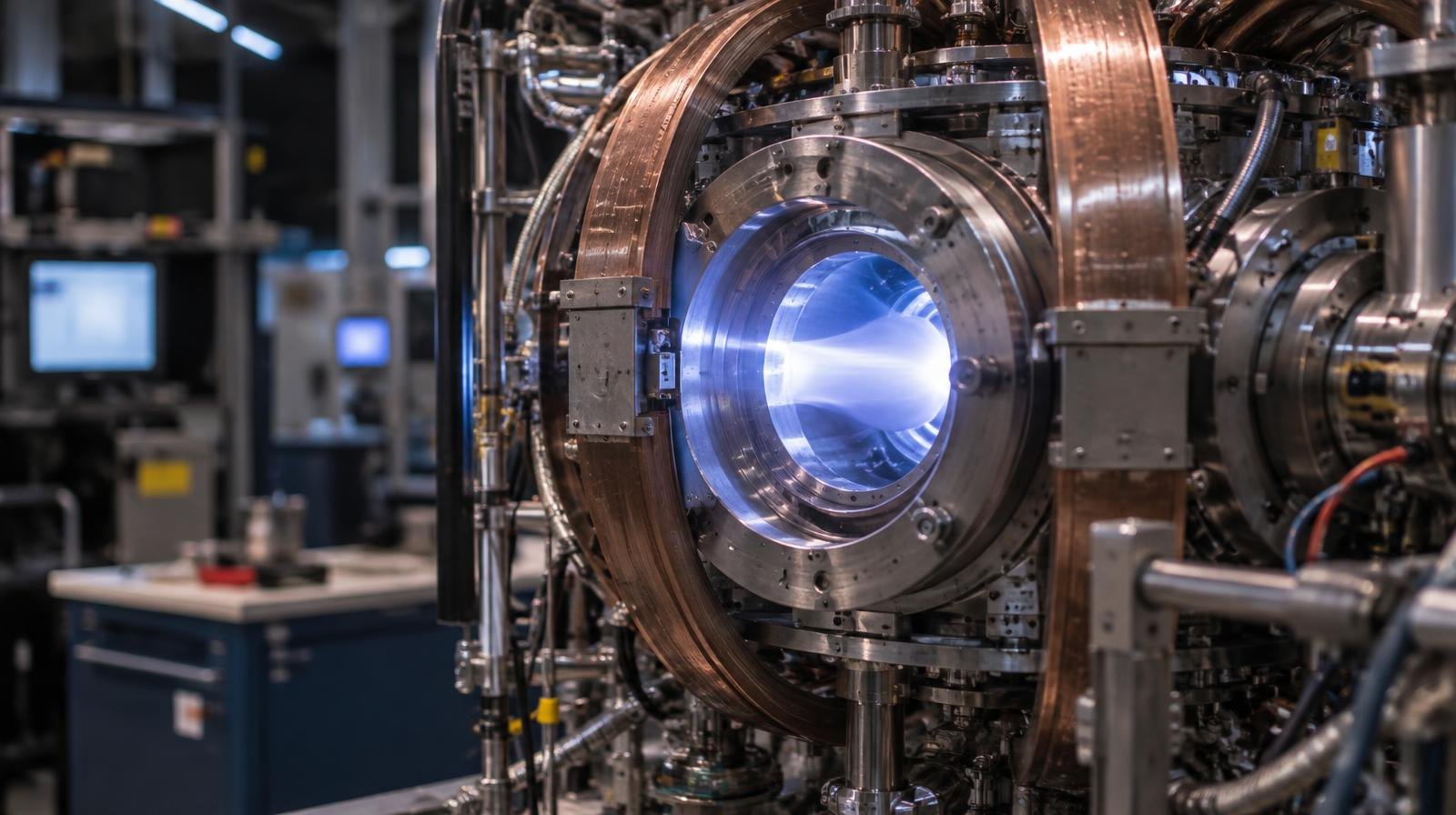
Helion is testing its seventh-generation Polaris fusion device in Everett and building a smaller machine called Tiny Merge as it works toward its Microsoft deadline.