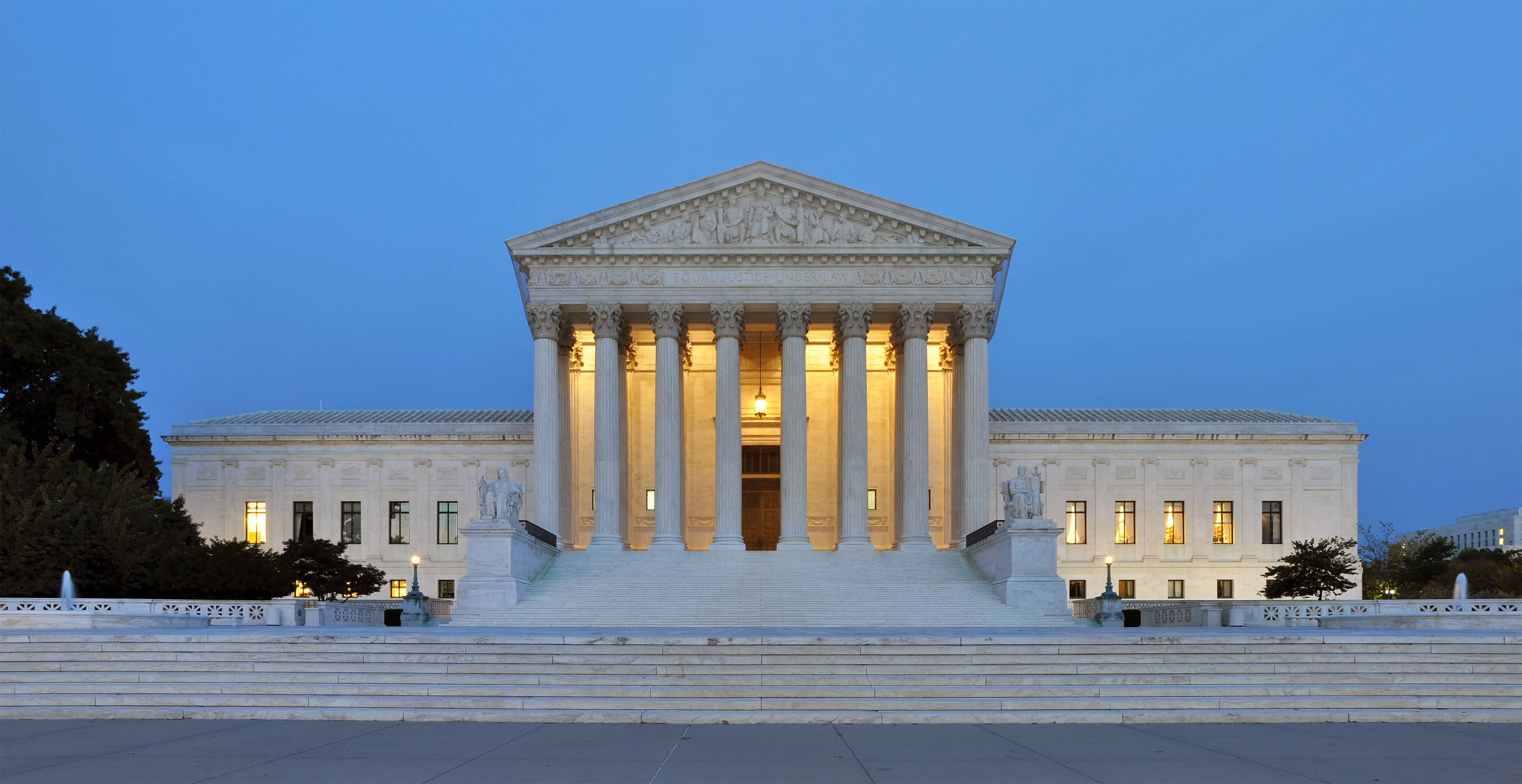
Everett voters who expect their mail-in ballots to arrive without a hitch this fall now face an uncertain legal landscape after the U.S. Supreme Court on Aug. 24, unblocked a Trump administration directive that pressures state officials to cross-check voter rolls against incomplete federal citizenship databases.
The 6-3 ruling stayed a lower-court injunction that had shielded Washington and 22 other states from Section 2 of Executive Order 14399.
That section orders the Department of Homeland Security to compile "State Citizenship Lists" and directs the Department of Justice to investigate and, if warranted, prosecute election officials who issue ballots to ineligible voters. The penalty under federal law: up to five years in prison.
The result is a legal bind for Washington Secretary of State Steve Hobbs and county auditors statewide, including in Snohomish County.
Use the federal lists and risk disenfranchising eligible voters who don't appear in incomplete federal records. Ignore them and risk a DOJ investigation.
No complete federal database of adult U.S. citizens exists. Birth records are state documents, and many native-born citizens, including Native Americans, never appear in naturalization files or passport databases used to build the lists.
The executive order itself acknowledges these gaps, requiring DHS to create procedures for individuals to correct their records.
Hobbs pushes back
Hobbs said Aug. 24 that "these last-minute requirements would place significant burdens on state and county election officials at a time when our resources are already strained. Our focus should be on administering a secure, accurate, and accessible election for Washington voters, not implementing unnecessary federal requirements just weeks before ballots are mailed."
Washington Attorney General Nick Brown, who co-led the 23-state legal challenge alongside California, Massachusetts and Nevada, criticized the president's actions as a "grave threat" to democracy. "States control elections, not the president," Brown said.
Washington has been an all-mail voting state since 2011. Registered voters automatically receive ballots; they do not request them. The state verifies eligibility through sworn statements and matching against Department of Licensing records, not a federal master list.
What remains blocked
A separate provision of the same executive order, Section 3, would require states to submit voter lists to a USPS "Federal Ballot Mail Portal" and allow the Postal Service to refuse delivery of ballots to voters not on those lists.
That section remains blocked nationwide by a preliminary injunction U.S. District Judge Indira Talwani issued Aug. 11.
On Tuesday, Aug. 25, Judge Talwani found that USPS violated her injunction by completing its rulemaking and issuing a final rule, but she imposed no remedy beyond identifying the violation, according to the Lynnwood Times. The Trump administration filed a separate emergency motion Aug. 24, asking Talwani to lift the Section 3 injunction entirely, citing the Supreme Court's reasoning. She had not ruled on that motion as of Aug. 25.
What's next for Everett and Snohomish County voters
Everett voters, like all Snohomish County residents, will receive their ballots by mail ahead of the Nov. 3 general election. That date is less than three months away.
The Supreme Court's majority noted its stay "does not mean that any measure taken by the government to implement the order will necessarily be lawful." The legal fight continues in lower courts, and any voter removed from rolls based on the federal lists could sue county officials under the 14th Amendment, the Voting Rights Act or Washington's state constitution.
Hobbs' office said it remains committed to defending Washington's constitutional authority to administer its elections.