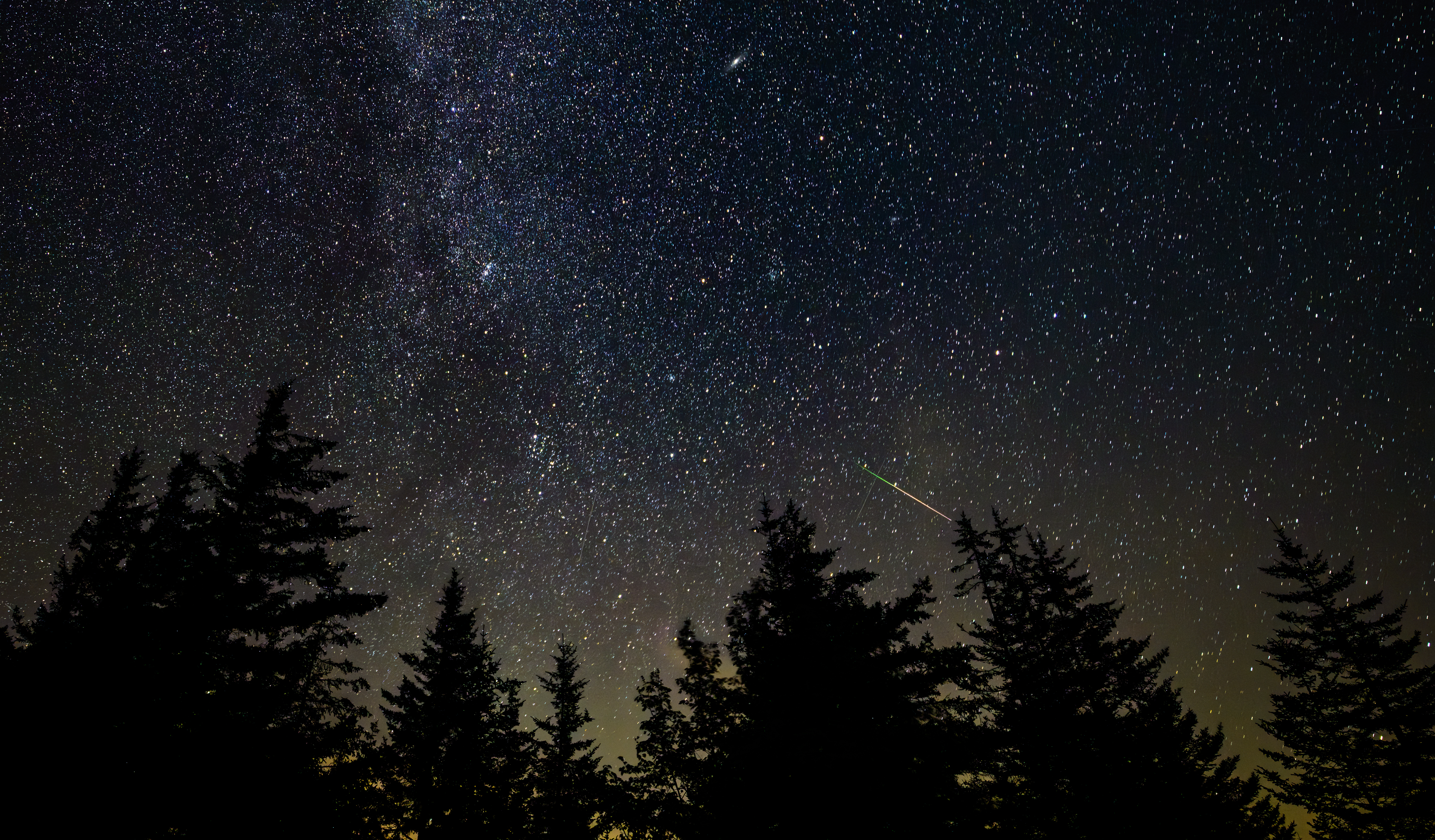
A Perseid meteor blazed across south Everett's sky just after midnight on Friday, Aug. 14, bright enough to get caught on a Snohomish County traffic camera at 128th St. SW and 4th Ave. W.
Snohomish County Public Works shared the footage on X Friday, noting the shower continues through Aug. 24 and could produce more local sightings.
The show isn't over. While the Perseids peaked the night of Aug. 12-13, meteors will keep streaking through the atmosphere for another week. And this year's conditions are unusually good. The peak coincided with a new moon, according to EarthSky, meaning darker skies than most years for spotting faint streaks.
When and where to look
The best window is after 11 p.m., with the highest rates between midnight and dawn. Meteors appear to radiate from the constellation Perseus in the northeast but can flash across any part of the sky. The American Meteor Society estimates peak rates of up to 40 meteors per hour at dark sites, though numbers will decline through the weekend as the shower winds down.
No telescope needed. No binoculars. Just your eyes, a dark spot and about 30 minutes of patience for your vision to adjust.
Best spots in Everett
Finding true darkness inside city limits is tough. Everett's parks, including Forest Park and Howarth Park, officially close at dusk, according to the city's parks department. That rules them out for late-night viewing.
The most practical in-city option: the Port of Everett waterfront along Marine View Drive and Grand Ave Park, where open-sky views face west over Puget Sound and away from the city's eastern light pollution. Local stargazers on Reddit have flagged the waterfront as Everett's best bet for night-sky watching without leaving town.
As for Jetty Island, the seasonal ferry's last departure is by 6:45 p.m., so the island isn't reachable at night unless you have your own kayak or boat.
For the darkest skies, driving east toward the Cascades foothills or north into rural Snohomish County will reward the effort.
Tips for the weekend
Bring a reclining lawn chair to avoid neck strain. Leave your phone in your pocket once you settle in, since screen light resets your night vision. Dress in layers.
The Perseids are free, require zero equipment and run every August when Earth passes through debris left by Comet Swift-Tuttle. The weekend of Aug. 15-16 offers Everett's last strong chance to catch them before the shower fades after Aug. 24.