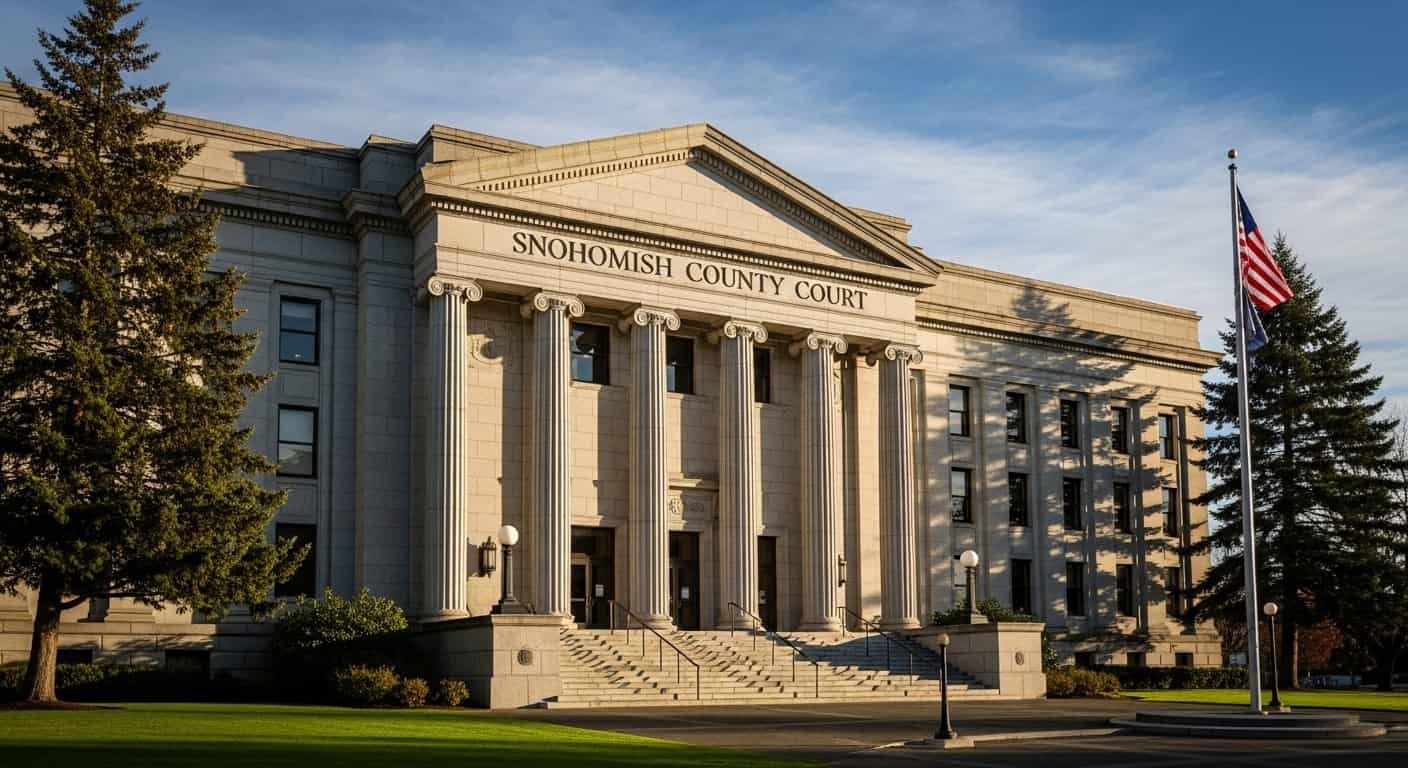
On a Thursday afternoon in late June, about 70 people filed into a fourth-floor courtroom at the Snohomish County Superior Courthouse in Everett. One by one, they sat across from a judge at a conference table and shared how long they'd been clean. Each answer drew applause from the gallery.
No robe. No bench. No docket numbers.
This is Snohomish County Adult Recovery Court, a voluntary sentencing alternative for adults with substance use disorder facing felony drug charges. The program, which meets one afternoon per week, offers participants a path to having their charges dismissed if they complete 12 to 24 months of intensive treatment, accountability, and milestones.
Snohomish County Superior Court Judge Karen Moore took over leading the county's therapeutic courts in 2026. She sits at the same table as participants and calls them by first name.
Moore said her approach is personal. Her sister spent time incarcerated for drug offenses, giving her firsthand experience of how substance use disorder fractures families.
Recovery Court Coordinator Luke Emerson runs sessions alongside Moore and roughly a half-dozen social workers. During the June 18 session, Emerson celebrated a participant's milestone by letting her pick from a prize jar.
The program demands serious work. It begins with at least four weeks of intensive inpatient treatment, followed by outpatient care and mental health services including Moral Reconation Therapy. To graduate, participants must earn a GED or high school diploma, pay restitution to any victims, log at least six months of clean urine tests, and maintain regular attendance at sober support meetings and court appearances. Show up even a few minutes late to the weekly session, and you owe two hours of community service.
The payoff: felony drug charges dismissed.
Since 1999, 1,019 people have completed the program, according to court records. In 2025, 20 participants graduated with a combined 14,225 days of sobriety. Moore cited an 85% figure for participants who have no new felony charges within five years of leaving recovery court, including those who don't finish the program, though no independent study has been published to verify the claim.
Jenna Fitzgerald, an Everett resident about seven months into the program, has more than 400 days of sobriety. She was eight years clean before relapsing, losing everything, and getting arrested. She told the Herald the program rebuilt her support system from scratch. She has her own place, a car, and is enrolled in community college.
Benjamin Martin, a lifelong Everett resident with more than 450 days of sobriety, relapsed twice after first entering drug court before treatment stuck. He's enrolled in a welding program at Everett Community College, working on getting his driver's license, and manages a sober living house. He said the program helped him rebuild relationships with his son, his parents, and his friends.
The court has capacity for 125 participants but was only about half full as of June, according to the Herald's reporting. The program meets weekly at the Snohomish County Superior Courthouse, and the clapping has become so frequent that Moore has had to set limits on the celebrations.