Snohomish County wants to keep a tire-dust chemical from killing salmon in Upper North Creek, and residents near Everett and Mill Creek can weigh in starting Tuesday, Sept. 22.
The county's Upper North Creek Stormwater Management Action Plan, or SMAP, lays out projects to cut the amount of 6PPD-quinone (6PPD-Q) reaching the 2.8-square-mile subbasin in unincorporated Snohomish County.
The chemical forms when 6PPD, a preservative added to vehicle tires, reacts with ozone in the air. Rain washes the resulting tire-dust particles from roads and parking lots into streams.
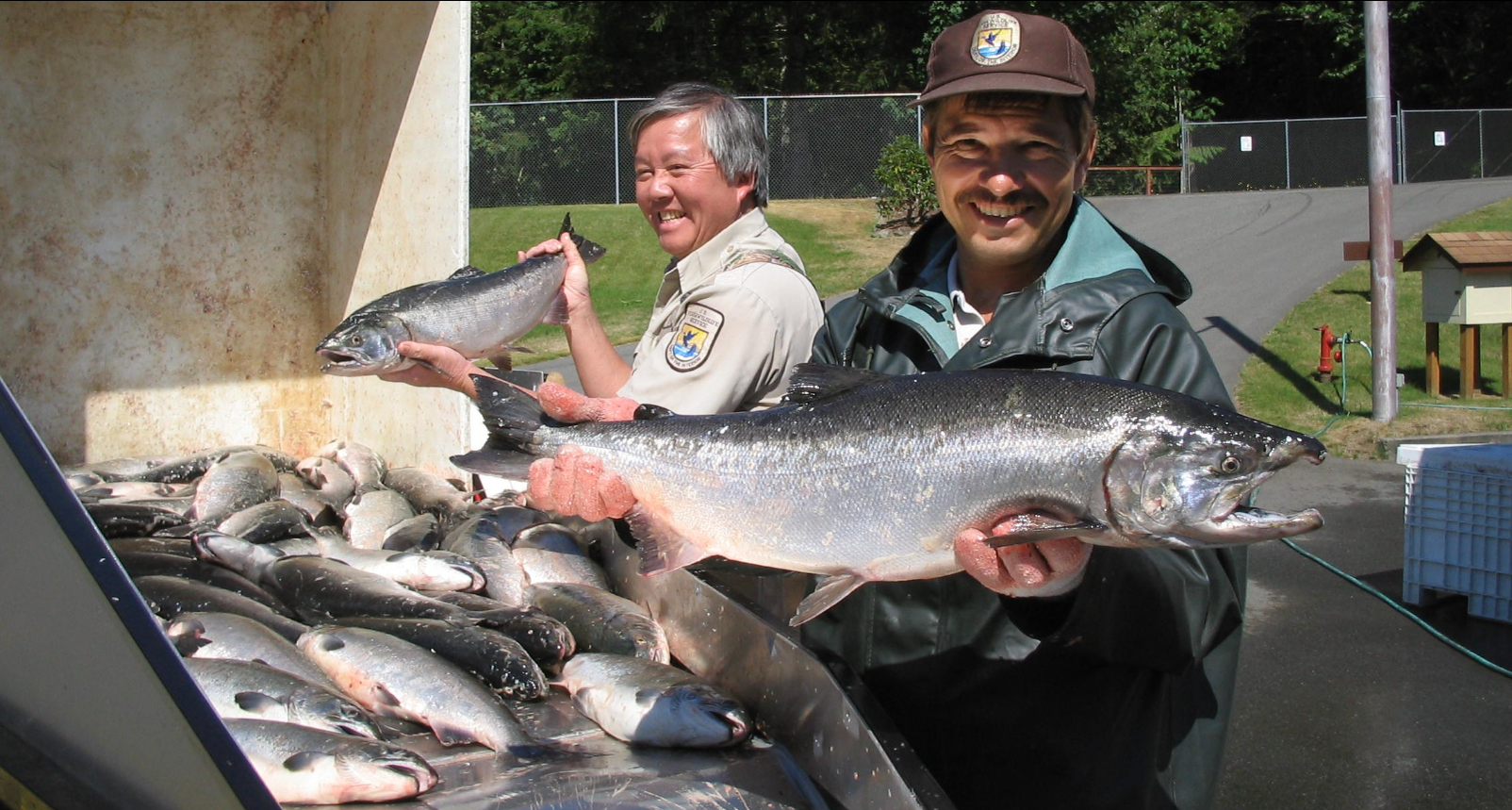
The substance is lethal to coho salmon. A 2021 study published in the journal Science found that stormwater concentrations of 6PPD-Q can kill coho after just a few hours of exposure, according to the U.S. Environmental Protection Agency. In some returning runs, as many as 90 percent of adult coho died before spawning, Encyclopedia of Puget Sound reported in January 2026. Steelhead and coastal cutthroat trout are also considered vulnerable.
Upper North Creek was chosen for the plan because it has more roads than many Snohomish County watersheds, and 6PPD-Q flows from those roads to the creek through more stormwater pipes than other basins, according to the county.
What the plan proposes
The SMAP calls for increased street sweeping, partnerships with light rail and transportation agencies to reduce tire dust, tree plantings and streamside restoration, and adoption of the best available science for treating 6PPD-Q. The county identified 12 potential sites for new stormwater treatment systems, though further study is needed before construction.
No new fees are proposed. Existing stormwater utility fees and outside grants would fund the work.
The county held a virtual community meeting on May 6, conducted in English and Spanish, to present the project. Meeting slides listed Jennifer Adams, a Surface Water Management project specialist, as the county contact, along with team members Arthur Lee, a Surface Water Management supervisor, and Alexa Ramos-Cummings, a senior planner.
The science behind the urgency
Researchers at the University of Washington Tacoma and Washington State University-Puyallup first identified 6PPD-Q in 2020. A January 2026 study published in Environmental Science & Technology found the chemical may be just as harmful to juvenile coho as to adults. In tests during three spring storms at Miller Creek, about 80 percent of exposed juvenile fish died each time.
"The fish were dying in about six hours," Jenifer McIntyre, director of the Aquatic Toxicology Lab at Washington State University, said in January 2026 when the study was published.
The lower stretch of Upper North Creek is home to coho, steelhead and sculpin, according to the county's SMAP page. A separate county listing also names Chinook salmon in the creek. North of McCollum Park, the stream runs dry in summer unless heavy rain falls.
What's next
The draft SMAP is open for public comment through Friday, Oct. 30. The county must finalize the plan by March 31, 2027, under its federal National Pollutant Discharge Elimination System (NPDES) permit. Short-term projects run from 2027 through 2033 under the plan. Long-term work extends through 2047.
Residents can reach the project team through Jennifer Adams at 425-388-5422.