Everett bus riders could see more frequent service, a new rapid-transit line and the end of the city's standalone transit system after the Community Transit Board of Directors approved a six-year plan that formally restarts merger talks with Everett Transit.
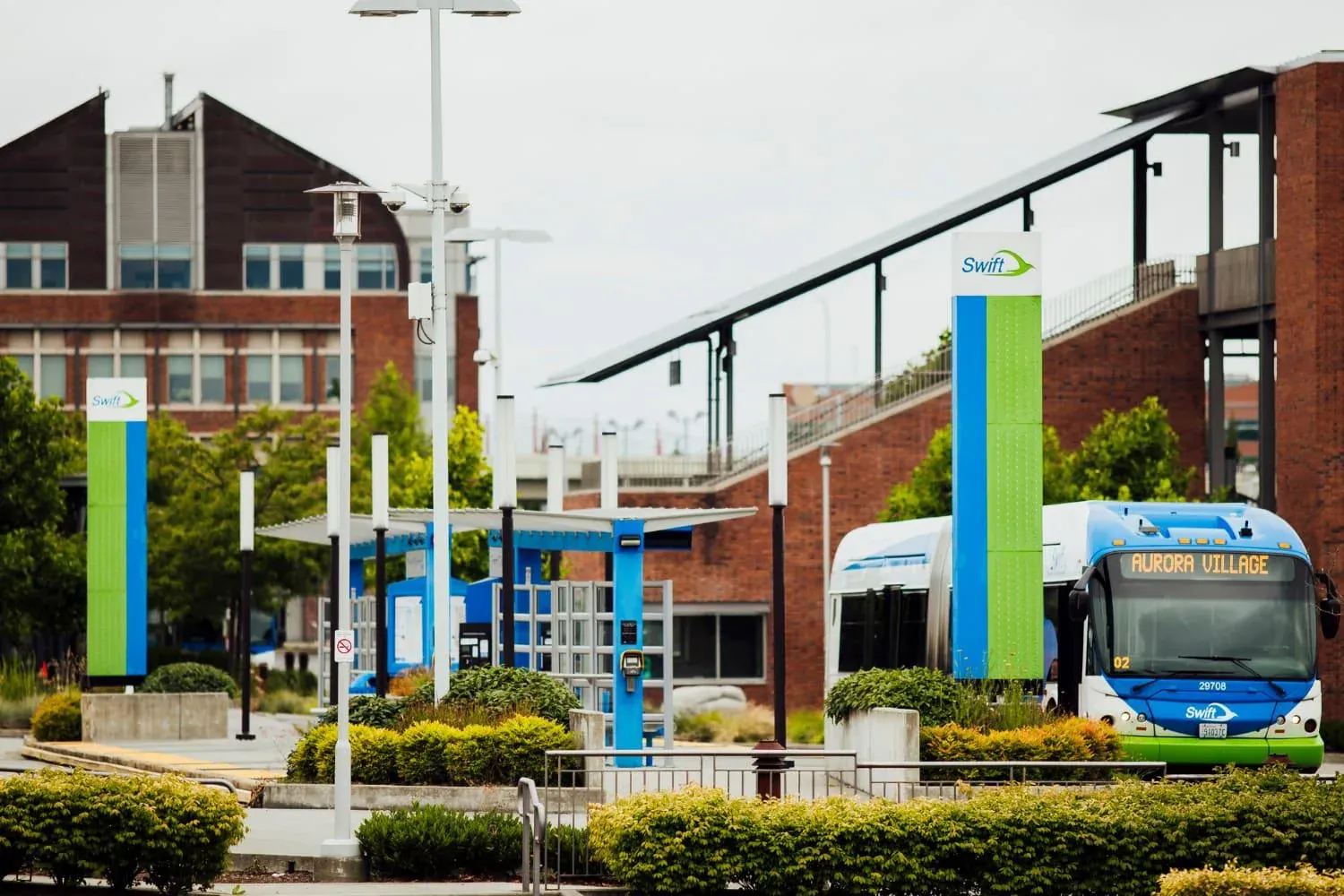
The 2026-2031 Transit Development Plan commits Community Transit to launching the Swift Gold Line, a bus rapid transit corridor connecting Everett, Marysville and Arlington. It also resumes work toward annexing Everett Transit into the countywide system, a move that would require votes by both the Everett City Council and the Community Transit Board, according to the Lynnwood Times.
Both bodies intend to vote in October.
What changes for riders
The joint Rethink Transit Study found that consolidation would nearly triple the number of Everett bus stops with service every 15 minutes or better, jumping from 219 stops to 590 by 2036.
That same study projected 76,300 jobs would be reachable within a 30-minute transit ride from Everett under a merged system, up from roughly 52,800 under the current structure, according to an Aug. 4 op-ed in the Everett Herald citing the study's data.
A voter-approved 0.9% city sales tax increase, by comparison, would bring only 169 stops to that frequency level.
The TDP also continues three Zip Shuttle microtransit pilots in Arlington, Darrington and Lake Stevens, with Community Transit evaluating new zones in 2026.
Merger timeline and terms
A draft interlocal agreement between the city and Community Transit is scheduled for release in September, followed by a public hearing in October. Community Transit CEO Ric Ilgenfritz said at a July 29 board workshop that having two separate agencies creates structural inefficiencies, as snoho.com reported on Aug. 5.
"We want to make sure we maintain continuity of service on day one," chief planning and development officer Melissa Cauley said at the same July 29 workshop, describing priorities that include continuing fixed routes and paratransit, reducing transfers, adding microtransit and improving service to underserved areas.
Chief people and financial officer Eunjoo Greenhouse said at that workshop that the city would be compensated for land costs, with other assets valued at depreciated book value. Community Transit will honor all collective bargaining agreements, she added.
Everett is the only city in the Puget Sound region that still operates its own municipal transit system. Community Transit was formed in 1976; at that time, Everett chose to keep its city-only service.
Other TDP highlights
Beyond the merger and Gold Line, the plan calls for extending the Swift Green Line in Bothell, growing Community Transit's security team to 48 officers and dispatchers by the end of 2026, and completing a zero-emission bus fleet conversion by 2044.
What's next
The draft interlocal agreement arrives in September. Residents can track the city's consolidation planning at everettwa.gov/2786/Transit-Consolidation. The Everett City Council and Community Transit Board are both targeting October votes to finalize the merger.